BBO vs. BIO: Choosing the Right Biology Competition for College Applications

For students aiming to pursue degrees in biology, medicine, or pharmacy, relying solely on standardized test scores is no longer sufficient. High-value academic competitions have become the key differentiator in college applications.

The BBO and BIO are two premier international biology competitions favored by top university applicants. Their exam content closely aligns with standard high school curricula, features a short preparation cycle, and requires a relatively low investment, making them excellent opportunities to learn through competition.

However, the BBO and BIO each have distinct focuses. How should students from different educational systems choose between them? This guide breaks down the details to help you select the right competition and efficiently strengthen your biology application profile.

BBO and BIO Competition Overview

I. British Biology Olympiad (BBO)

Established in 1995 and hosted by the Royal Society of Biology (RSB), the BBO is one of the most influential high school biology competitions in the UK and globally. It is not only officially recommended by the University of Cambridge as a valuable extracurricular activity but also serves as a standout credential for applicants targeting biology and medical programs at the UK G5 universities and US Ivy League schools.

The 2026 BBO introduces significant changes: the number of questions for the China region has surged from 160 to 296, setting a new historical record. The exam duration is 90 minutes, featuring multiple-choice, fill-in-the-blank, sequencing, and chart analysis questions. It comprehensively assesses students' ability to recall knowledge and answer efficiently under pressure. The exam is offered in both Chinese and English. It is suitable for high school students of any grade, with a strong recommendation for 9th and 10th graders who are new to international competitions. Official data shows a global award rate of 60%, while the China region's award rate exceeded 70% in 2025.

II. BIO-USACN (USABO China Region)

Formerly known as the USABO China Region, this assessment is one of the most academically rigorous and influential STEM evaluations in the United States, often regarded as the ceiling of biology challenges. Hosted by the Center for Excellence in Education (CEE), it is used to select the US team for the International Biology Olympiad (IBO).

The 2026 BIO-USACN will be held on April 4. With approximately 1,000 participants in the China region, spots are highly limited and competition is fierce; the Super Gold award is restricted to the top 50 students nationwide. The exam lasts 50 minutes and consists of 50 multiple-choice questions, allowing only about 60 seconds per question, which demands exceptional speed and accuracy. Designed to identify truly gifted and high-potential biology students, the BIO-USACN is administered entirely in English, placing a heavy emphasis on language proficiency and deep analytical skills.

How to Choose Based on Your Curriculum?

AP Curriculum: The Natural Fit for BIO

The AP Biology curriculum closely mirrors foundational college-level biology in the US, emphasizing conceptual understanding and scientific practice. This aligns perfectly with the academic logic of the BIO-USACN. AP Biology students hold a natural advantage in the BIO exam, as the vocabulary, question styles, and linguistic environment used in preparation are fully compatible. After completing each unit, students can directly tackle BIO past papers to train their ability to extract keywords and analyze complex, multi-layered prompts.

However, there is a slight structural mismatch between AP Biology and the BBO. The BBO is based on the UK educational system's life sciences framework and covers broader modules such as plant anatomy and physiology, animal behavior, and biosystematics compared to AP Biology. For students seeking systematic competition experience, it is advisable to prioritize BIO as the main focus while using BBO as a supplementary track to expand breadth and cover key UK-specific modules.

A-Level Curriculum: The Ideal Match for BBO

A-Level Biology shares a high degree of overlap with the core knowledge tested in the BBO, with statistics showing an 80% alignment. A-Level students preparing for the BBO do not need to build a knowledge framework from scratch. Instead, they can dedicate most of their effort to mastering synonym conversion, rapid question analysis, and cross-module integration. Conversely, when facing the BIO-USACN's all-English format and fast-paced challenges, A-Level students will require additional training in American biological terminology and predictive supplementation of advanced modules that lean toward US research contexts.

IB Curriculum: The Versatile Choice for Both

The IB Biology HL course covers core topics such as cell biology, molecular biology, genetics, and ecology, which are highly relevant to the BBO's key testing points. Furthermore, the IB curriculum's strong emphasis on experimental design and data analysis aligns closely with the recent testing trends of the BIO-USACN. Consequently, IB students currently benefit the most from participating in both competitions. Rather than drastically adjusting training logic for each track, IB students simply need to moderately elevate their studies based on the IB syllabus, strengthen their ability to construct knowledge networks, and engage in targeted past paper practice for both exams to achieve one preparation for two exams.

Aligning Competitions with UK vs. US College Applications

For students applying to UK G5 universities (especially Oxford and Cambridge): The BBO serves as a highly effective stepping stone. The University of Cambridge explicitly recommends the BBO as a valid academic activity for biology-related majors. While the BIO-USACN primarily serves the US system for IBO team selection, many students applying to US universities have found that the global academic perspective demonstrated through the BBO also strongly persuades admissions officers.

For students applying to US Top 30 universities in biology, medicine, or pharmacy: The BIO-USACN offers greater differentiation. US admissions officers place a higher value on a student's determination and ability to tackle more challenging material. The BIO-USACN's assessment of comprehensive research literacy seamlessly aligns with the pedagogical philosophy of US higher education.

For Grade 10 students still in the exploration phase: It is more suitable to start with the BBO to receive a systematic and comprehensive introduction to biology, establishing a solid knowledge framework. For Grade 11 students who already have a competition foundation and aim for a significant breakthrough, targeting the BIO-USACN is the ideal path to secure the core label of academic potential.


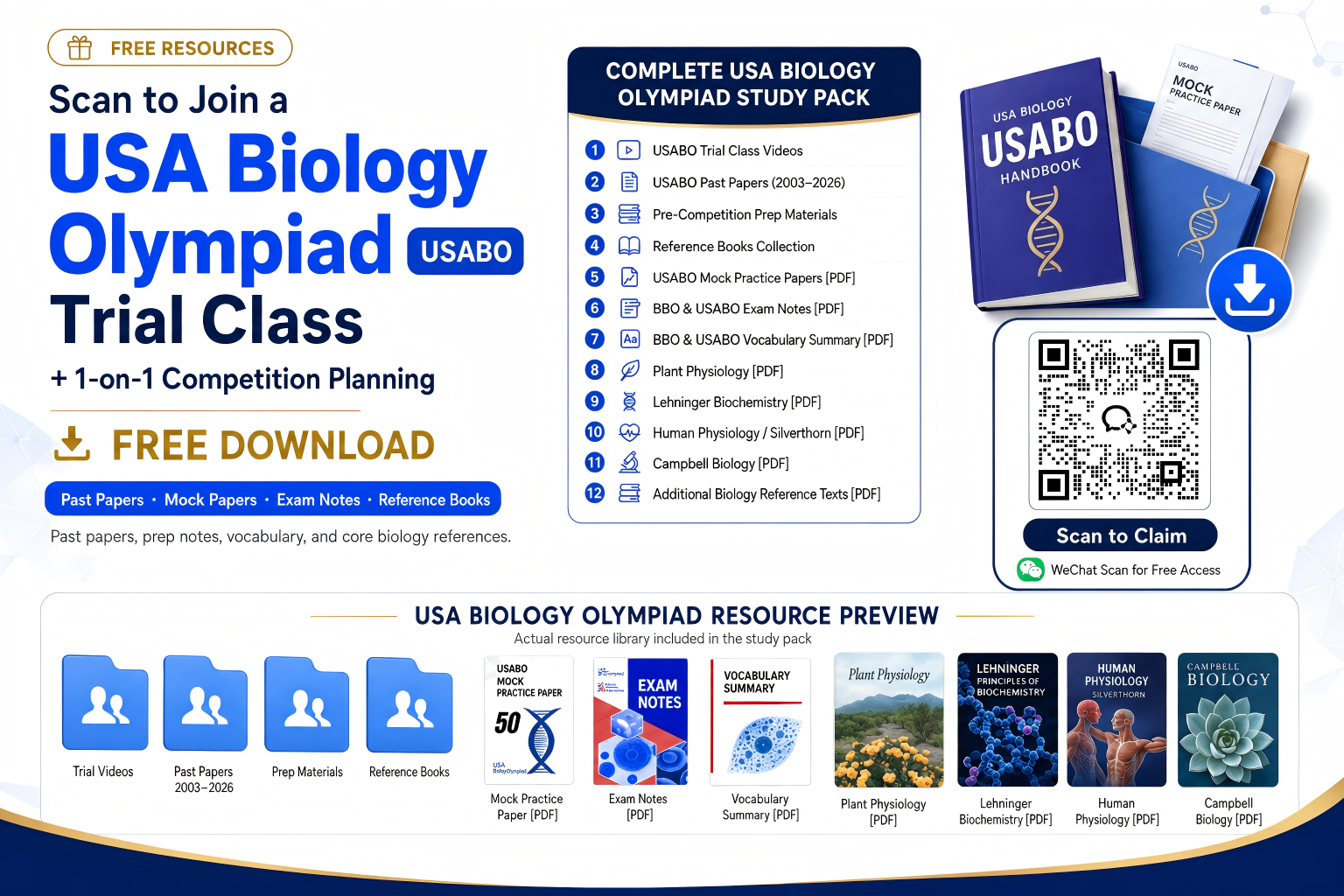
Get FREE USABO Preparation Materials

Scan the QR code below to access free practice papers, study guides, and past competition materials. Start preparing today!
推荐

2026 USABO Cutoff Scores Surge: Strategic Prep Guide for the 2027 Cohort

Recent results for the USABO, Physics Bowl, and Euclid Mathematics Competition have been released, revealing a significant surge in cutoff scores across all events and intensifying competition. Notably, the USABO Gold Medal cutoff has skyrocketed to 40 points, a substantial increase from previous years, with the Super Gold Medal threshold nearing a perfect score.

Students preparing for the 2027 exam cycle are already feeling the pressure before the competition even begins. The era of broad, unstructured preparation is over. To successfully stand out in this highly competitive landscape, candidates must urgently adjust their USABO preparation strategies and focus their efforts precisely.

2026 USABO Competition Cutoff Scores

From the data below, we can see that the cutoff scores for all award tiers have increased significantly compared to the past two years:

Year Super Gold Gold Silver Bronze
2024 25 pts 20 pts - -
2025 38 pts - - -
2026 45 pts 40 pts - -

Note: The 2026 Super Gold cutoff increased by 7 points compared to 2025, while the Gold cutoff rose to 40 points.

This year's USABO exam was perceived as moderately difficult to challenging, with a noticeable shift in flexibility. The overall style has clearly moved away from "rote memorization" toward "true understanding, practical application, and logical reasoning."

Comparing the past three years, the Super Gold cutoff jumped from 25 points in 2024 to 45 points, while the Gold cutoff doubled from 20 to 40 points.

What does this mean? With 50 questions worth 1 point each, Super Gold candidates can afford to miss at most 5 questions, and Gold candidates at most 10. Every single question counts. Over two years, the Super Gold threshold has risen by 20 points, leaving virtually zero margin for error. A single point difference can shift a Gold to a Silver, or a Silver to a Bronze.

2026 Exam Analysis

The 2026 USABO has concluded, showcasing improved question quality and a steady increase in difficulty. The question design style and focus have shifted noticeably from previous years, while the overall structure remains consistent with the past five-year framework. The core module distribution is stable. Below is a comprehensive analysis based on the actual exam.

1. Overall Exam Overview & Structure

The question quality has significantly improved over the previous year. Based on the depth of analysis and discussion value, it far surpasses past exams that were criticized for being too easy or loosely structured. The overall framework aligns with the past five years, with the five core modules unchanged and 70% of high-frequency topics repeating annually. The exam duration and format remain traditional, focusing on familiar core modules.

The overall difficulty falls in the medium-to-high range, which is reflected in the score distribution: the proportion of high-scoring candidates has decreased, demanding stronger comprehensive skills from students. The exam continues to emphasize distinguishing high-value knowledge points, requiring candidates not only to master core concepts but also to uncover the underlying biological logic. Even incorrect options often contain valuable learning points.

2. Question Design, Style Shifts & Difficulty Trends

The exam has completely moved away from traditional "pure memorization" toward a comprehensive assessment of "understanding, application, and reasoning." Difficulty has steadily increased, with more practical and flexible question formats:

  • Diversified Question Types, Fewer Easy Points: Basic recall questions that can be answered instantly have been reduced. There are almost no "giveaway" questions. The proportion of comprehensive analysis, chart interpretation, and real-world experimental scenarios has increased. Stems are longer, distractors are more subtle, and success requires flexible application and cross-module integration. Rote memorization is no longer sufficient.
  • Reasonable Distribution of Out-of-Syllabus Topics: Some questions cover topics beyond the standard syllabus, but they focus on logical elimination and reasoning rather than pure recall. Many involve inspiring frontier research or evolutionary studies with high extracurricular value. A few purely memorization-heavy out-of-syllabus questions have lower reference value.
  • Alignment with Core Textbook: Most questions are based on the Campbell Biology textbook, testing mastery of detailed concepts and the ability to extend knowledge.
  • Clear Difficulty Tiers, Comprehensive Questions as Core: Medium-difficulty comprehensive questions dominate and are the key to differentiating scores. Hard questions focus on genetic calculations, signaling pathways, ecological models, and protein structures, emphasizing logical thinking over mechanical memorization.

3. Module Breakdown & Core Content

The exam covers all core biological modules, with a distribution consistent with previous years. Each module has a clear weight and focus:

Module Weight
Animal Anatomy & Physiology 25%
Cell Biology 20%
Genetics & Evolution 20%
Plant Anatomy & Physiology 15%
Ecology 10%
Animal Behavior & Biological Systematics 5% each

2026 New Focus Areas: Neurobiology (synaptic transmission, action potentials), Bioinformatics (sequence alignment, phylogenetic trees, genome annotation).

Based on specific questions, the assessment shows clear targeting:

Basic Recall & Differentiation

These questions focus on textbook fundamentals. For example, identifying non-polar amino acids is a recurring standard topic. Solid foundational knowledge ensures success. Some questions, while from the textbook or slightly beyond, rely on pure memorization with limited logical application.

Logical Reasoning & Comprehensive Analysis

These are the core challenges and key differentiators:

  • Genetics & Calculations: Includes replicated past paper formats testing reading and calculation skills. Questions involving Bayesian statistics require calculating conditional probabilities from stem data. Genetic recombination frequency calculations require identifying parental and double-crossover types, using simplified mathematical approaches.
  • Biochemistry: Covers metabolic pathways like Acetyl-CoA, requiring knowledge of retro-Claisen condensation and VB12-mediated radical rearrangement. Other questions test the impact of reducing agents on disulfide bonds and protein quaternary structure.
  • Molecular & Cellular Biology: Tests GPCR enzymatic properties and codon recognition mutations, requiring reasoning about tRNA function changes during translation.
  • Out-of-Syllabus & Extension: Includes evolutionary case studies solvable by elimination. FRET experimental techniques are tested directly on application, not just concepts. The Allee effect (previously seen in 2023) helps explain extinction vortices. Clinical scenario questions (e.g., young age, polyuria, weight loss, ketoacidosis) test real-world medical reasoning.

Special Question Types

Includes math/logic questions like Levenshtein vs. Hamming distance, testing mathematical thinking and attention to detail. Nash equilibrium questions require on-the-spot understanding of "mutual best response" and probability analysis for population stability. Some questions act like "brain teasers," requiring quick extraction of key stem information.

4. Emerging Trends for 2026

The 2026 USABO shows four clear trends aligned with American biology education:

  • Increased real-world medical scenarios integrating biology with clinical cases.
  • Deeper exploration of molecular mechanisms, focusing on "how regulation works and why" rather than just "what it is."
  • More predictable calculation patterns (Michaelis-Menten equation, recombination frequency, Hardy-Weinberg), allowing targeted practice to boost scores.
  • Direct testing of frontier techniques like CRISPR and FRET, emphasizing practical application over theoretical concepts.

Compared to the past five years, the 2026 framework is stable but more challenging. Neurobiology carries more weight, ecology and plant biology focus on mechanisms and environmental adaptation, and basic bioinformatics has been added. The exam is more detailed and comprehensive.

While the US cutoff dropped by 3 points this year, China's is expected to follow suit. Scoring 30+ points demonstrates strong subject mastery. Student feedback varies, with some finding it moderately difficult and others noting the high flexibility and depth required, reflecting a comprehensive assessment of overall competency.

USABO Competition Details

The USA Biology Olympiad (BIO-USACN internationally) is organized by the Center for Excellence in Education (CEE), a non-profit academic institution founded in 1983. CEE selects and trains the US national team for the International Biology Olympiad (IBO). Outside the US, the competition is known as BIO-USACN.

2026 USABO Key Dates

Item Time / Details
Registration Deadline March 24, 2026
Official Exam Date April 4, 2026 (Saturday) 10:30–11:20 (50 minutes total)
Results Release 4–6 weeks after the exam (China Region)
Competition Stages Open Exam → Semifinal → National Finals

Eligibility & Registration

  • Target Audience: High school students in grades 9–12 globally. No nationality restrictions. Open to public high schools, international departments, and AP/IB/A-Level students.
  • Ideal For: Students aiming for top US/UK universities in Biological Sciences, Basic Medicine, Neuroscience, Bioinformatics, or Public Health.
  • Registration: Must be done through ASDAN China's official platform or authorized partner institutions. Individual registration is not permitted.

Exam Format & Location

Location: Online or Offline. Online exams require a webcam to ensure fairness.

Format: Individual written test, 50 multiple-choice questions. Total score: 50 points. Duration: 50 minutes (approx. 1 minute per question).

Award Structure (Global & China Dual Certification)

  • Global Awards: Gold, Silver, Bronze, Honorable Mention (based on global percentile rankings).
  • China Region Awards: National Gold, Silver, Bronze, Regional Excellence. Officially certified, valid for both domestic advancement and overseas applications.

Preparation Timeline for the 2027 Cohort

  • Now – March 2026: Systematically build the complete knowledge framework before registration closes.
  • September – January: BBO sprint phase.
  • January – March: Deep USABO breakthrough and timed past-paper training.
  • Early April: Official USABO exam.

Strategic Prep Adjustments

Phase 1: Foundation Building (Now – October)

Intensively study core chapters of Campbell Biology (cellular respiration, photosynthesis, genetics, gene regulation, evolution, ecological energy flow), covering over 80% of the syllabus. Supplement with BBO/USABO core knowledge manuals and curated past papers to quickly master overlapping topics.

Phase 2: BBO Sprint (November – January, Pre-BBO)

Adapt to high reading volumes and long question stems. The BBO features nearly 300 questions, requiring ~25 seconds per question. Practice with the last 5 years of past papers to build speed and information extraction skills. Goal: Secure an award to build a psychological buffer for USABO.

Phase 3: Deep Reinforcement (January – March, Post-BBO)

Address knowledge gaps and logical flaws exposed during BBO prep. Focus on USABO-specific content: genetic calculations, neurobiological molecular mechanisms, signaling pathways, and bioinformatics data analysis. Repeatedly practice 5–10 years of USABO past papers under strict time limits. Aim for 2–3 full mock exams per week.

Phase 4: Final Sprint (1–2 Months Before Exam)

Use high-intensity mock exams to develop "second-level reaction" intuition. Review error logs to minimize mistakes on foundational questions and secure the "guaranteed" points needed for a Gold Medal.

The Dual-Competition Advantage (USABO & BBO)

Historically, USABO tests depth while BBO tests breadth, with a 90% core knowledge overlap centered on Campbell Biology. The major advantage now is the staggered schedule: BBO has moved to mid-January, while USABO remains in early April, creating a nearly 3-month window for dual preparation.

  • Complete Knowledge Reuse: BBO covers all core modules (cell, genetics, physiology, ecology), directly covering 80% of USABO basics.
  • Dual Insurance: BBO is relatively more accessible. Securing a BBO award first provides a safety net, allowing focused pursuit of the USABO Gold (~10% rate vs. BBO China's 10-12%). Concurrent prep increases the probability of winning high-value awards.
  • Psychological Edge: A BBO award significantly boosts confidence, improving pacing and mindset for the April exam. UK-focused students should prioritize BBO; US or dual-track students should run both to maximize competitiveness.

Historical Achievement Data (Reference)

Year USABO Gold USABO Silver USABO Bronze
2018 5 students - -
2019 7 students - -
2020 7 students - -
2021 8 students - -
2022 8 students 2 students -
2023 9 students 3 students -
2024 9 students - -
2025 17 students 6 students -
Year BBO Gold BBO Silver BBO Bronze
2018 4 students - -
2019 6 students - -
2020 7 students - -
2021 8 students - -
2022 10 students 2 students -
2023 12 students 3 students -
2024 12 students 4 students -
2025 30 students 12 students 2 students

Get FREE USABO Preparation Materials

Scan the QR code below to access free practice papers, study guides, and past competition materials. Start preparing today!
推荐

USABO vs. BBO Biology Olympiad: Difficulty Comparison & Dual Preparation Guide for 2027

USABO and BBO are two of the most prestigious biology competitions. USABO emphasizes deep logical reasoning, making it ideal for students targeting top 30 US universities. BBO focuses on broad knowledge and speed, making it highly suitable for students applying to UK G5 universities or those in grades 9–11.

USABO & BBO Difficulty Analysis

BBO British Biology Olympiad: Breadth-Focused Difficulty

Exam Format: 90 minutes, bilingual (Chinese/English). The number of questions increases annually (reaching up to 297 in 2025). Question types include multiple-choice, fill-in-the-blank, and chart analysis.

Content Coverage: Built on the A-Level Biology curriculum, covering plant and animal taxonomy, animal behavior, and large-scale ecology. It emphasizes rapid reading, information filtering, and broad knowledge retention.

Awards: Gold medals are awarded to the top 5% nationally, with an overall award rate of approximately 60%. Students with an A in A-Level/IB Biology who prepare systematically will find it moderately challenging to secure a Silver award.

Key Challenges: The massive question volume requires high-intensity problem-solving within 90 minutes, heavily testing answering speed.

USABO USA Biology Olympiad: Depth-Focused Difficulty

Exam Format: 50 minutes, 50 multiple-choice questions. The exam is entirely in English, featuring lengthy research-based prompts and complex professional clauses, setting a very high English proficiency threshold.

Content Coverage: Based on AP Biology, it extensively extends into college-level general biology, molecular signaling pathways, biochemical mechanisms, and cutting-edge research case studies.

Awards: Gold medals in the China region are limited to the top 10% nationally. The exam heavily emphasizes logical reasoning, cross-chapter integration, and tracing underlying biological principles.

Key Challenges: Each question contains a large amount of information with numerous distractor options. With an average of only one minute per question, deep conceptual understanding is far more critical than rote memorization.

Can You Prepare for USABO & BBO Simultaneously?

Advantages of Dual Preparation

High Content Overlap: The five core modules—cells, genetics, plant and animal physiology, evolution, and ecology—are completely aligned. Students can use a single core textbook, Campbell Biology, for foundational study.

Complementary Skill Development: Deep-diving into principles for USABO makes tackling difficult BBO questions easier. Conversely, BBO’s broad knowledge coverage fills in niche taxonomy and ecology gaps for USABO, mutually boosting scores.

Competition Selection & University Application Guide

UK/G5 & Hong Kong Universities: BBO holds higher priority. A Gold award is a standard bonus for biology/medicine applications, with USABO serving as an excellent supplementary credential.

US & Top North American Universities: USABO carries higher recognition. BBO can be used as a secondary competition to enrich the applicant’s profile.

Dual Application (UK & US): The optimal strategy is to take both competitions simultaneously. Holding two authoritative biology awards from the UK and US significantly strengthens applications for majors in biology, biochemistry, neuroscience, medicine, and environmental science.


Get FREE USABO Preparation Materials

Scan the QR code below to access free practice papers, study guides, and past competition materials. Start preparing today!
推荐

USABO Biology Olympiad: Value, Difficulty, and Preparation Guide

The USABO (United States of America Biology Olympiad) is a highly sought-after credential for students applying to top biology programs, including those at Cambridge University. But just how valuable is the USABO? Is it genuinely recognized by elite universities, and how can students overcome its challenges to achieve a Super Gold Medal?

Understanding the Value of the USABO Biology Competition

Whether measured by competition recognition, academic rigor, or college application competitiveness, the USABO stands out. Students aiming for top-tier biology programs should strongly consider participating.

01 Competition Recognition

Hosted by authoritative American biological institutions, the USABO is widely recognized as a premier high school biology competition in North America. Top universities in the UK and the US highly value the USABO Super Gold Medal, often treating it as a significant implicit advantage during the admissions screening process.

02 Academic Rigor

The USABO is conducted entirely in English and covers a broader and deeper scope than the BBO (British Biology Olympiad). It emphasizes profound biological knowledge and flexible analytical thinking. The exam encompasses cell biology, plant and animal physiology, genetics, ecology, and evolution. Its difficulty surpasses AP Biology and approaches the level of a first-year university biology course. It rigorously tests a student's academic foundation, effectively bridging the gap to college-level biology and providing a significant advantage over standard high school curricula.

03 Application Value

Holding a USABO award allows applicants to stand out in a sea of resumes dominated by math and physics competitions. Many USABO Super Gold Medalists have received priority admissions to prestigious biology and biomedical programs at institutions like MIT, Harvard University, and Johns Hopkins University.

Strategic Preparation Guide: Overcoming Key USABO Challenges

Compared to the BBO, the USABO features twice the depth of biological knowledge, is administered entirely in English, includes extensive text and data analysis questions, and operates under strict time constraints. To secure a Super Gold Medal, students must systematically address these challenges.

Challenge 1: Broad and Deep Knowledge Base

Preparation Strategy: Base your study on the official USABO syllabus. Systematically organize topics such as cell biology, plant and animal physiology, genetics, ecology, and evolution. Expand upon AP Biology concepts by connecting isolated facts into a cohesive framework. Focus on mastering unfamiliar biological concepts to build a solid foundation.

Challenge 2: Extensive Academic Vocabulary

Preparation Strategy: Compile a glossary of core biological terminology and USABO-specific vocabulary. Ensure a thorough understanding of high-frequency terms. Supplement your studies by reading extracurricular biology journals and scientific literature to accumulate relevant case studies and contextual examples for the exam.

Challenge 3: Strict Time Constraints

Preparation Strategy: Enhance your familiarity with core biological concepts through consistent practice. Schedule weekly USABO past paper drills to identify efficient problem-solving methods and techniques. Begin timed practice sessions early in your preparation to steadily improve your answering speed and exam pacing.

Challenge 4: Heavy Text and Data Analysis

Preparation Strategy: Overcoming this challenge requires consistent practice and systematic review. Group similar question types or chart-based problems together. Develop standardized problem-solving models for specific topics. Cultivate a flexible, analytical biological mindset and promptly review and analyze any incorrect answers to prevent recurring mistakes.


Get FREE USABO Preparation Materials

Scan the QR code below to access free practice papers, study guides, and past competition materials. Start preparing today!

推荐

Top 4 International Biology Competitions: A Complete Guide for Students

For students planning to apply for majors in biology, chemistry, medicine, materials science, and related fields, international biology competitions are a well-known pathway to enhance college application competitiveness. However, many students struggle to decide which competition to take, what specific knowledge areas to focus on, and when to begin preparation. This guide breaks down four top-tier international biology competitions and provides tailored preparation advice by grade level.

Brain Bee World Brain Science Competition – Junior Division

For students in Grade 9 and below, the Brain Bee World Brain Science Competition (Junior Division) is highly recommended. Designed for Grades 5–8, this competition presents a unique challenge because it does not test comprehensive biology. Instead, it focuses exclusively on neuroscience and brain science. Participants must be in Grade 8 or lower.

Competition Format: The competition consists of two parts: a written exam and a poster presentation. The written exam contains 40 questions (fill-in-the-blank and multiple-choice), with each question worth 1 point. The poster presentation is completed in teams and is worth 40 points. The team's score is applied to each individual member for this segment.

Exam Content: The syllabus covers basic brain structures, foundational neurobiology, nervous system disorders, sensory perception, and brain development. It heavily emphasizes the anatomy and functions of the brain, focusing primarily on fundamental concepts in brain and neuroscience.

Award Structure: The competition holds moderate prestige. At the regional level, the award distribution is relatively broad, with first, second, and third prizes covering approximately 40% of participants. The Junior and Senior divisions are ranked separately. During the China regional stage, candidates from both divisions are pooled for advancement to the next round, but awards are still distributed separately by division.

Preparation Advice: This competition requires mastery of neuroscience-specific content. Since neuroscience is a highly specialized niche that is only briefly touched upon in standard school curricula, students must engage in extensive independent study and deep learning. Consequently, it requires a significant amount of dedicated preparation time.

Brain Bee World Brain Science Competition – Senior Division

The Brain Bee (Senior Division) is designed for older high school students. While the format remains similar to the Junior Division, the difficulty, intensity, breadth, and depth of the exam are significantly increased.

Exam Content: For students aiming to pursue advanced studies in neuroscience or brain science, this competition carries extremely high prestige. It covers foundational neurobiology and brain science, but expands significantly beyond the Junior syllabus. Topics include specific nervous system diseases and their treatments, brain injuries, the neurological impacts of substance abuse and countermeasures, and the effects of external environments on brain development. These topics are highly applied and detailed. The exam also places a heavier emphasis on neuroanatomy, requiring dedicated study and memorization of complex brain structures. Overall, Brain Bee is a deeply rigorous and highly respected competition.

Competition Format: The competition is divided into three segments: a written exam, specimen identification, and case/video diagnosis. The written exam consists of 50 questions (fill-in-the-blank and multiple-choice), worth 1 point each. Specimen identification includes 13 questions, worth 2 points each. The pathology diagnosis section contains 8 main questions, worth 3 points each.

BBO – British Biology Olympiad

Organized by the Royal Society of Biology, the British Biology Olympiad (BBO) has been running since 1995, making it one of the longest-running and most influential high school science competitions in the UK. Nearly 10,000 British high school students participate annually. The competition serves as the primary selection process for the UK team competing in the International Biology Olympiad (IBO).

Outstanding performance in the BBO not only earns participants Gold, Silver, or Bronze medals but also significantly strengthens applications to top-tier global universities for medicine, biology, and other STEM majors. High achievers may also receive invitations to prestigious international science events to network with peers worldwide.

Exam Content: The syllabus distribution is as follows: 20% Cell Biology, 15% Plant Anatomy & Physiology, 25% Animal Anatomy & Physiology, 5% Animal Behavior, 15% Genetics & Evolution, 15% Ecology, and 5% Taxonomy. The BBO syllabus is broader than the standard A-Level curriculum, incorporating A-Level material alongside first-year university biology concepts. It demands a strong foundational knowledge base and features innovative, flexible question formats.

Competition Format: Individual written exam featuring multiple-choice and fill-in-the-blank questions. The paper is available in both Chinese and English. The duration is 90 minutes. Multiple-choice questions may be single or multiple answer. Fill-in-the-blank questions primarily focus on calculations.

Award Structure: Awards for international participants are determined using the UK national cutoff scores: Gold (top 5%), Silver (top 15%), Bronze (top 30%), High Commendation (top 45%), and Commendation (top 60%).

Preparation Advice: The 2023 exam featured over 160 questions, placing a high demand on pacing and speed. Compared to the USABO, the BBO has a clearer scope and is relatively more straightforward, but time management is critical. For students targeting UK or European universities, a BBO Gold medal is highly advantageous, as UK G5 universities strongly recognize BBO results.

USABO – USA Biology Olympiad

The USA Biology Olympiad (USABO) is organized by the Center for Excellence in Education (CEE), which annually selects and trains the US team for the International Biology Olympiad (IBO). It is widely regarded as one of the most academically rigorous and influential STEM competitions in the United States. Often considered the most challenging and prestigious biology competition after the IBO, it attracts over 10,000 American high school students each year.

Exam Content: The syllabus covers Cell Biology, Molecular Biology, Biotechnology, Plant Physiology, Animal Physiology, Evolution, Systems Biology, Genetics, Animal Behavior, and related advanced topics.

Competition Format: Individual written exam consisting of 50 multiple-choice questions. The duration is 50 minutes.

Award Structure: Gold (top 10%), Silver (top 25%), Bronze (top 35%), and Regional High Commendation (top 20% per region).

Preparation Advice: The USABO and BBO syllabi overlap significantly, allowing students to prepare for both simultaneously. However, the USABO is notably more difficult. It places a stronger emphasis on fine details, professional depth, and logical reasoning. While the BBO tests core logical frameworks, the USABO tests exhaustive knowledge—essentially requiring students to know every detail, down to the smallest elements. The exam format is fixed at 50 questions, creating a tight pace of roughly one minute per question, which adds considerable time pressure.

iHOSA – Future Health Professionals Leadership Challenge

The iHOSA competition focuses on contemporary biological and health-related challenges facing humanity. It is structured into three main components: the Academic Testing Challenge (ATC), which covers standard foundational biology similar to regular exams; the Biomedical Debate/Community Engagement (BCE), which involves public service projects, team collaborations, or creating public service announcements and educational workshops; and the Career & Professional Challenge (CCE), which tests specialized knowledge in areas like physiology and pathology.

Exam Content: The ATC closely mirrors standard major exams, covering animal physiology, plant physiology, cell physiology, genetics, molecular biology, ecology, and health-related topics. Students unfamiliar with these areas will need additional study time, though official prep materials are provided. The BCE component requires an interest in media and communication, as participants must prepare PSAs or educational classes.

Award Structure: All participants receive an official certificate of participation. Top performers in individual events (top 5%, 15%, and 30%) receive Gold, Silver, and Bronze medals nationally. Additional regional awards are distributed using the same percentage thresholds.

Preparation Advice: This competition builds upon standard curriculum knowledge while incorporating critical thinking and practical application. For students already studying AP, IB, or A-Level biology, the difficulty is moderate. The official syllabus clearly outlines overlaps with AP, IB, and A-Level curricula, making it easy to identify supplementary topics. A preparation period of 1–2 months is recommended, while students with weaker foundations should allow 3–4 months. The CCE division has seen rising participation and overlaps with psychology (e.g., behavioral health), microbiology, nutrition, biochemical pathology, and biotechnology. The national round adds approximately 30% more content compared to the preliminary stage.

Recommended Preparation Timeline by Grade Level

  • Grade 9 and below: Begin preparing for the Brain Bee Junior Division early in the academic year.
  • Grade 10: Start iHOSA preparation early in the year. Begin BBO prep mid-year. Prepare for Brain Bee late in the year (optional, recommended only for students highly interested in neuroscience).
  • Summer after Grade 10: Begin comprehensive preparation for iHOSA.
  • Grade 11 (Fall Semester): Start intensive preparation for BBO and USABO. These competitions require extensive memorization and long-term study. Students deeply interested in neuroscience or brain science may also begin preparing for the Brain Bee Senior Division.

This guide covers the essential details of the four leading international biology competitions. We hope it provides clear direction for your academic planning. Best of luck in your competitions and future college applications!


Get FREE USABO Preparation Materials

Scan the QR code below to access free practice papers, study guides, and past competition materials. Start preparing today!

推荐

USABO Biology Olympiad 2026: Complete Knowledge Guide & Registration Info

The cutoff scores for the USABO Biology Olympiad are expected to rise significantly in 2026, making it increasingly challenging for students to secure Gold or Super Gold awards. This comprehensive guide systematically outlines the core knowledge modules and high-frequency test points for the USABO Open Exam (covering cell biology, genetics, physiology, evolution, ecology, and more), helping you precisely focus your preparation and maximize your chances of success.

Part 1: Core USABO Biology Knowledge Points

1. Animal Anatomy and Physiology (≈25%, 12–13 questions) Highest Weight

Nervous System: Action potentials (Na⁺/K⁺ pumps, depolarization/repolarization), synaptic transmission, neurotransmitters (acetylcholine/dopamine), autonomic nervous system (sympathetic vs. parasympathetic).

Immune System: B/T cell activation, humoral vs. cellular immunity, antibody structure, vaccines, and immunological memory.

Endocrine System: Negative feedback regulation (thyroid, insulin/glucagon, adrenal glands).

Circulatory/Respiratory/Excretory/Reproductive Systems: Cardiac blood flow pathways, gas exchange, nephron reabsorption, and urine concentration mechanisms.

New Hot Topics: Neurodegenerative diseases (Alzheimer's β-amyloid protein), immune checkpoints.

2. Cell Biology (≈20%, 10 questions)

Organelle functions (mitochondrial ETC, endoplasmic reticulum, Golgi apparatus, lysosomes).

Membrane transport (active/passive, endocytosis/exocytosis, sodium-potassium pump).

Cell Signaling: GPCR pathways, second messengers (cAMP/Ca²⁺).

Cell cycle and checkpoints (G1/S, G2/M), apoptosis.

Protein synthesis (transcription → translation, transcription factors, operon model).

3. Genetics and Evolution (≈20%, 10 questions)

Classical Genetics: Mendelian laws, pedigree analysis, linkage and crossing over (three-point test cross), sex linkage.

Molecular Genetics: DNA replication/transcription/translation details, CRISPR-Cas9 principles, PCR/electrophoresis/Western blot.

Population Genetics: Hardy-Weinberg equilibrium calculations (allele frequencies), genetic drift, gene flow.

Evolution: Natural selection, neutral theory, speciation, phylogenetic tree interpretation.

New Addition: Epigenetics (DNA methylation, histone modification).

4. Plant Anatomy and Physiology (≈15%, 7–8 questions)

Vascular tissues: Xylem (water transport/transpiration pull) vs. Phloem (assimilate transport).

Photosynthesis: Light reactions (PS I/PS II, electron transport chain) vs. Dark reactions (Calvin cycle), Rubisco dual activity.

Differences and adaptive significance of C3/C4/CAM plants.

Plant hormones: Auxins (tropisms), gibberellins, cytokinins, abscisic acid, ethylene (synergistic and antagonistic effects).

Photoperiodism (short-day/long-day flowering).

5. Ecology (≈10%, 5 questions)

Population growth models: Exponential (J-shaped) vs. Logistic (S-shaped), r/K selection.

Communities: Competitive exclusion, predation models (Lotka-Volterra), mutualism/parasitism.

Ecosystems: Energy pyramids (10% rule), carbon/nitrogen/phosphorus cycles.

Biodiversity and conservation biology.

6. Animal Behavior (≈5%, 2–3 questions)

Innate behaviors (fixed action patterns, imprinting) vs. Learned behaviors (classical/operant conditioning).

Evolutionary explanations for altruism (kin selection).

Animal communication and social behavior.

7. Biological Systematics (≈5%, 2–3 questions)

Taxonomy: Kingdom, phylum, class, order, family, genus, species; binomial nomenclature.

Three-domain system (Archaea/Bacteria/Eukarya), five-kingdom system.

Phylogenetic tree construction and interpretation (shared derived characteristics, convergent evolution).

New Cross-Disciplinary Topics Starting in 2026 (Integrated Across Modules)

Neurobiology: Deepened ionic mechanisms of action potentials, molecular pathological basis of Alzheimer's/Parkinson's diseases.

Bioinformatics: DNA/RNA sequence alignment (BLAST principles), homologous gene identification, basic phylogenetic tree inference.

Part 2: The Value and Prestige of the USABO

High Recognition in College Applications

The USABO serves as a crucial academic credential for students applying to top U.S. universities for biology, neuroscience, biomedical sciences, and pre-med tracks. Compared to AP Biology, the USABO reaches the difficulty level of a first-year college course (Campbell Biology), effectively demonstrating a student's advanced academic capabilities.

Rigorous Selection and High Scarcity

The USABO exam lasts 50 minutes, requiring students to complete 50 multiple-choice questions in English. The high volume of questions and tight time limit demand exceptional knowledge fluency. Award quotas in the China region are strictly controlled, with Super Gold awarded to approximately the top 5% and Gold to the top 15%. This low award rate ensures the purity of the honor, prevents credential inflation, and makes it highly trusted by admissions officers.

A Proving Ground for Research Capabilities

Preparing for the USABO is equivalent to completing a university-level introductory biology course. It builds a solid theoretical foundation for future research summer programs (such as SSP and RSI) and laboratory projects. Additionally, award winners often receive invitations to participate in top-tier international scientific events.

Part 3: USABO Registration Information

The USABO China region is organized by ASDAN under the official name BIO-USACN (USA Biology Olympiad China). It uses the exact same English questions as the U.S. Open Exam.

How to Register for USABO (BIO-USACN):

1. School Test Center Registration (Recommended)

Students attending ASDAN partner schools can register through their school's science or competition teachers. Alternatively, students can independently fill out their information and pay fees via the official ASDAN International Science Assessment WeChat mini-program.

2. Authorized Agency Registration

If a school is not a designated test center or cannot organize a group, students may register through an ASDAN-authorized training institution. Please note that agency registration deadlines are typically earlier, and spots are limited.


Get FREE USABO Preparation Materials

Scan the QR code below to access free practice papers, study guides, and past competition materials. Start preparing today!

推荐

A Complete Guide to International & Domestic Biology Competitions for Students

For students interested in biology and planning to pursue related majors in the future, which international biology competitions are available? At what grade level should you start preparing? How should you choose among Brain Bee, BBO, USABO, ASOB, and the National Biology Olympiad? This guide provides a comprehensive overview.

When Should You Start Preparing for Biology Competitions?

It is highly recommended to begin preparation in 8th grade, and at the latest by 10th grade. Biology competitions require memorizing a vast amount of information, making them highly dependent on memory retention. Compared to chemistry competitions, biology requires memorizing and reciting significantly more knowledge points. In fact, it is often jokingly referred to by educators and students as the "National High School Memory Contest" or the "National High School Luck Contest."

Introduction to High-Value Biology Competitions

In China, the primary competition is the National Biology Olympiad. Internationally, students can participate in the Brain Bee Neuroscience Competition, the British Biology Olympiad (BBO), the USA Biology Olympiad (USABO), the Australian Science Olympiad for Biology (ASOB), and HOSA, among others. What are the key differences between these competitions, and at what grade levels can students participate?

International Biology Competition Pathway

  • Beginner's Choice: British Biology Challenge (BC) Junior Level (Grades 7-9)
  • Academic Challenge: USA Biology Olympiad (USABO) (Grades 10-12), Australian Science Olympiad for Biology (ASOB)
  • Medicine & Public Health Focus: HOSA, ChinaMDO
  • Neuroscience Focus: Brain Bee (Grades 5-12)
  • UK University Application Pathway: BC → iBO → BBO offers a clear and structured progression route.

Domestic Biology Competition Pathway

The domestic pathway centers on the National Biology Olympiad, guiding students through progressive stages of competition to reach the national level and qualify for international representation.

Competition Preparation & Student Achievements

Over the years, structured preparation programs have yielded outstanding results, helping numerous students win major awards in international biology competitions:

  • USABO (USA Biology Olympiad): Multiple students have won National Gold Medals, with several advancing to the US Semifinals.
  • BBO (British Biology Olympiad): Consistently high award rates, with numerous Global and National Gold Medals achieved.
  • ASOB (Australian Science Olympiad for Biology): Comprehensive coverage of Global First, Second, and Third Prizes.
  • iBO (Intermediate British Biology Olympiad): Multiple students have secured Global Gold Medals.
  • HOSA (Future Health Professionals): Numerous participants have successfully advanced to the China National Finals.

Get FREE USABO Preparation Materials

Scan the QR code below to access free practice papers, study guides, and past competition materials. Start preparing today!

推荐

USABO 2026 Results & 2027 Preparation Guide: Cutoff Scores, Exam Analysis, and Strategy

Recent results for the USABO, Physics Bowl, and Euclid Mathematics Competition have been released, revealing a significant surge in cutoff scores across the board and intensifying competition. Notably, the USABO Gold Medal cutoff has skyrocketed to 40 points, a substantial increase from previous years, with the Super Gold Medal threshold nearing a perfect score.

Students preparing for the 2027 cohort are already feeling the pressure before the competition even begins. The era of broad, unstructured preparation is over. To successfully stand out in this highly competitive landscape, it is crucial to promptly adjust your USABO preparation strategy and focus your efforts precisely.

2026 USABO Competition Cutoff Scores

As shown in the table below, the cutoff scores for all award tiers have seen a significant increase compared to the past two years. Most notably, the Super Gold Medal cutoff jumped from 38 points in 2025 to 45 points in 2026, a 7-point surge.

Year Super Gold Gold Silver Bronze
2024 25 20 15 10
2025 38 32 26 20
2026 45 40 35 30

Comparing the past three years, the Super Gold threshold surged from 25 points in 2024 to 45 points, while the Gold cutoff doubled from 20 to 40 points.

What does this mean? With 50 multiple-choice questions worth 1 point each, earning a Super Gold Medal allows for a maximum of only 5 mistakes, and a Gold Medal allows for just 10. Every single question counts. Over the two years from 2024 to 2026, the Super Gold threshold increased by 20 points, leaving virtually zero margin for error. A single point difference can mean the difference between a Gold, Silver, or Bronze medal.

2026 Exam Analysis

The 2026 USABO has concluded, showcasing a marked improvement in question quality and a steady increase in difficulty. The question design style and assessment focus have shifted noticeably from previous years, while the overall exam framework remains consistent with the past five years. The core module distribution is stable. Below is a comprehensive analysis based on the actual exam conditions.

1. Overall Competition Overview & Exam Framework

The overall quality of this year's questions has significantly improved compared to the previous year. Judging by the depth of analysis and discussion value, it far surpasses past exams that were criticized for being too easy or loosely structured. The overall framework aligns with the past five years, maintaining a stable core structure. The five core modules remain unchanged, and 70% of high-frequency topics are repeated annually. The exam duration and question format also follow traditional patterns, with familiar key modules remaining the assessment core.

The overall difficulty falls in the medium-to-high range, which is directly reflected in the score distribution: the proportion of high-scoring candidates has contracted, placing higher demands on students' comprehensive abilities. The core assessment continues to emphasize question discrimination and guide students toward high-value knowledge points. It stresses that candidates must not only master core concepts but also uncover the underlying biological logic. Even details in incorrect options hold learning and discussion value.

2. Question Characteristics, Style Shifts & Difficulty Changes

The exam has completely moved away from the traditional "rote memorization" model, shifting toward a comprehensive assessment of "understanding, application, and reasoning." Difficulty has steadily increased, with more practical and flexible question formats. Key characteristics include:

  • Diversified Question Types, Fewer Easy Points: The number of basic questions that can be answered purely through memorization has been drastically reduced. Almost no questions have immediately obvious answers. The proportion of comprehensive analysis, chart interpretation, and real-world experimental scenario questions has increased. Stems are longer, distractors are more subtle, and the exam emphasizes flexible application and cross-module integration. Students must first interpret charts and apply knowledge to deduce answers; memorization alone is insufficient.
  • Reasonable Distribution of Out-of-Syllabus Questions: Some questions cover topics beyond the standard syllabus, but they do not test pure memorization. Instead, they require logical elimination and reasoning based on existing knowledge. Some out-of-syllabus content involves inspiring frontier research cases or evolutionary studies, offering high extracurricular learning value. A few questions relying solely on obscure memorization without practical discussion value have lower reference significance.
  • Alignment with Core Textbook Material: Most questions revolve around the core content of the Campbell Biology textbook, heavily testing mastery of detailed concepts. Some questions extend beyond the textbook to evaluate students' knowledge expansion capabilities.
  • Clear Difficulty Tiers, Comprehensive Questions as the Core: Medium-difficulty comprehensive questions are the absolute mainstay and are the key to differentiating scores and securing high marks. Difficult questions primarily focus on genetic calculations, signaling pathways, ecological models, and protein structures. These test logical thinking rather than mechanical memorization, demanding deeper conceptual understanding.

3. Module Distribution & Core Assessment Content

This year's exam covers all core biological modules. The distribution remains largely consistent with previous years, with clear weightings and focused assessment areas:

Module Weight Core Assessment Content
Animal Anatomy & Physiology 25% Nervous, endocrine, immune, circulatory & excretory systems; closely aligned with clinical cases
Cell Biology 20% Membrane proteins, signaling pathways, protein structure, PCR, CRISPR, and other lab techniques
Genetics & Evolution 20% Linkage calculations, Hardy-Weinberg equilibrium, population genetics, Michaelis-Menten equations, recombination frequencies
Plant Physiology 15% Photoperiodism, hormones, photosynthesis & transpiration, plant-environment adaptation
Ecology 10% Population dynamics, interspecific relationships, ecological model analysis, environmental adaptation
Behavior & Systematics 5% Foundational bioinformatics content

Based on specific questions, each module shows distinct assessment characteristics:

Basic Recall & Differentiation Questions

These questions typically revolve around foundational textbook concepts. For example, Question 31 tests the identification of non-polar amino acids, a frequently tested standard concept that requires solid foundational knowledge. Some questions, like 28, 33, and 35, while based on Campbell Biology or out-of-syllabus topics, rely heavily on pure memorization with minimal logical reasoning or application space, offering limited reference value.

Logical Reasoning & Comprehensive Analysis Questions

These represent the core difficulty and focus of the exam, serving as the primary differentiator for scores. They mainly include:

  • Genetics & Calculations: Question 11 replicates a 2018 past paper format, testing reading comprehension and calculation skills. Question 22 involves Bayesian statistics, requiring conditional probability calculations based on stem information, demanding strong logical thinking. Question 18 focuses on gene recombination frequency calculations, requiring mastery of parental and double-crossover type identification, and utilizing derivative-like thinking to simplify calculations.
  • Biochemistry: Question 24 tests the metabolic pathway of Acetyl-CoA, requiring knowledge of the retro-Claisen condensation reaction and VB12-mediated radical rearrangement mechanisms. Students familiar with core biochemical pathways can answer quickly. Question 25 focuses on the impact of reducing agents on disulfide bonds and protein quaternary structure, emphasizing conceptual understanding and application.
  • Molecular & Cellular Biology: Question 10 tests the enzymatic properties of GPCRs. While students can guess based on foundational knowledge, the question holds high extension value. Question 32 involves codon recognition mutations, requiring reasoning based on the role of stop codons during translation and understanding functional changes after tRNA mutations.
  • Out-of-Syllabus & Extension Questions: Several out-of-syllabus questions offer high heuristic value. Question 9 involves an evolutionary case study; while beyond the textbook, students can use elimination to find the answer, and the underlying evolutionary research approach is worth exploring.
    • Question 12 tests the FRET experimental method, a cutting-edge technique that broadens students' research horizons. These frontier tech questions now test practical application rather than just concepts.
    • Question 15 covers the Allee effect, previously seen in 2023, helping students understand extinction vortex principles.
    • Question 48 presents symptoms like young age, polyuria, weight loss, and ketoacidosis for disease diagnosis. Though slightly out-of-syllabus, it aligns with real clinical scenarios, positively expanding clinical thinking and knowledge reserves.

Other Special Question Types

The exam also included a few math and logic questions. Question 38 tests the difference between Levenshtein distance and Hamming distance, focusing on mathematical thinking and detail observation. These can be time-consuming, requiring careful time management. Question 45 involves Nash equilibrium, requiring on-the-spot comprehension of "mutual best response" characteristics combined with probability analysis to find population stable equilibrium points. Questions 42 and 44 test flexible application, resembling "brain teasers" that require quickly locking onto key stem information.

Based on this year's exam, the 2026 USABO reveals four clear new trends aligned with American biology education's applied focus:

  • Increased real-world medical scenario questions, deeply integrating biological knowledge with clinical cases to test application skills and clinical reasoning.
  • Deeper exploration of molecular mechanisms. Questions no longer just ask "what," but "how it's regulated and why," demanding deeper conceptual understanding.
  • Calculation questions follow more fixed patterns. Michaelis-Menten equations, recombination frequencies, and Hardy-Weinberg equilibrium have become high-yield scoring points. Targeted practice can significantly boost scores.
  • Cutting-edge technologies like CRISPR and FRET are tested on their practical application, not just theoretical concepts, emphasizing familiarity with modern research techniques.

Compared to the past five years, the 2026 framework remains highly stable but is undeniably more challenging. Neurobiology carries more weight, ecology and plant biology focus more on mechanisms and environmental adaptation, and foundational bioinformatics has been added. The exam is more detailed and comprehensive overall.

As of now, US cutoff scores have been released, showing a 3-point decrease from last year. China's cutoff is expected to follow suit, dropping by approximately 3 points. Given the exam's difficulty, scoring 30 or above demonstrates strong subject mastery. Student feedback varies: some found it moderately difficult, while others noted the high flexibility and deeper understanding required. This variation reflects the exam's comprehensive assessment of overall academic literacy.

USABO Competition Details

The USA Biology Olympiad (BioOlympiad Initiative USA-China, abbreviated as BIO-USACN) is organized by the Center for Excellence in Education (CEE). Founded in 1983, CEE is a non-profit academic institution that annually selects and trains the US Biology Olympiad team for the International Biology Olympiad (IBO). While the US region retains the name USABO, regions outside the US have been renamed BIO-USACN.

2026 USABO Core Schedule

Registration Deadline March 24, 2026
Official Exam Date April 4, 2026 (Saturday) 10:30–11:20, 50 minutes total
Results Release 4–6 weeks after the exam (China Region)
Competition Stages Open Exam → Semifinal → National Finals

Participant Eligibility & Registration Requirements

Eligibility Global high school students in grades 9–12. No nationality restrictions. Open to public high schools, international departments, and AP/IB/A-Level curriculum students.
Target Majors Ideal for students intending to apply to top US/UK universities for Biological Sciences, Basic Medicine, Neuroscience, Bioinformatics, Public Health, and related fields.
Registration Method Unified registration via the ASDAN China official platform or authorized partner agencies. Individual independent registration is not permitted.

Exam Format: Online/Offline. Online exams require a webcam to ensure fairness.

Question Format: Individual written exam, 50 multiple-choice questions. Total score: 50 points. Duration: 50 minutes (averaging 1 minute per question).

Exam Modules & Weight Distribution

1. Animal Anatomy & Physiology 25% (Core high-scoring module)
2. Cell Biology 20% (Signaling pathways, gene regulation, transmembrane transport, etc.)
3. Genetics & Evolution 20% (Mendelian genetics, molecular genetics, evolutionary mechanisms, Hardy-Weinberg law)
4. Plant Anatomy & Physiology 15% (Hormone regulation, photosynthesis & respiration, substance transport)
5. Ecology 10% (Population dynamics, community structure, ecosystem energy flow)
6. Animal Behavior & Systematics 5% each
7. 2026 New Focus Areas Neurobiology (synaptic transmission, action potentials), Bioinformatics (sequence alignment, phylogenetic trees, genome annotation)

Award Structure (Global & China Dual Certification)

Global Awards Gold, Silver, Bronze, Honorable Mention. Determined by global candidate score percentiles.
China Region Awards National Gold, National Silver, National Bronze, Regional Excellence. Officially certified certificates valid for both domestic advancement and overseas university applications.

Preparation Timeline for the 2027 Cohort:

  • Now to March (Registration Deadline): Systematically build the complete knowledge framework.
  • September to January: BBO Sprint Phase.
  • January to March: USABO Deep Dive & Timed Past Paper Practice.
  • Early April: Official USABO Exam.

Adjusting Your USABO Preparation Strategy

Phase 1: Foundation Building (Now – October)

Intensively read core chapters of Campbell Biology (cellular respiration, photosynthesis, genetic laws, gene expression regulation, evolutionary mechanisms, ecological energy flow), covering over 80% of the assessed material. Supplement with BBO/USABO core knowledge manuals and curated past papers to quickly master overlapping topics.

Phase 2: BBO Sprint (November – January, Pre-BBO)

Focus on adapting to high reading volumes and long question stems. The BBO features nearly 300 questions annually, requiring completion in roughly 25 seconds per question. Practice with the past 5 years of papers to train speed and information extraction. Goal: Secure a BBO award to build a psychological safety net for the USABO.

Phase 3: Deep Reinforcement (January – March, Post-BBO)

Use BBO results to identify knowledge gaps and logical weaknesses. Concentrate on USABO-exclusive content: genetic calculations, neurobiological molecular mechanisms, signaling pathways, and bioinformatics data analysis. Repeatedly practice 5–10 years of USABO past papers under strict timed conditions. Aim for 2–3 full mock exams per week.

Phase 4: Final Sprint (1–2 Months Before Exam)

Through high-intensity mock exams, develop "second-level" intuitive responses. Return to your error log to minimize mistakes on foundational questions, ensuring you secure the baseline score required for a Gold Medal.

The historical rule has been: USABO tests depth, while the British Biology Olympiad (BBO) tests breadth. Their core knowledge overlaps by 90%, and both heavily rely on Campbell Biology.

The major advantage now: The exam schedules are completely staggered! Recent adjustments have moved the BBO from April to mid-January, while the USABO remains stable in early April. This creates a nearly 3-month "window" between the two, providing an ideal timeframe for dual-competition preparation.

What are the real benefits of the "Dual Competition" strategy?

  • Complete Knowledge Reuse: The BBO covers all core modules (cell biology, genetics, physiology, ecology), directly covering 80% of the USABO's foundational content.
  • Double Insurance to Reduce Risk: The BBO is relatively more accessible. Securing a BBO award first provides a safety net, allowing you to confidently aim for a USABO Gold. The USABO Gold rate is ~10%, while the BBO China Gold rate is 10-12%. Preparing for both increases the probability of winning high-value awards.
  • Significant Psychological Advantage: A BBO award greatly boosts confidence, fundamentally changing your pacing and mindset entering the April exam. For students primarily applying to the UK, the BBO is the top choice. For US or dual-track applicants, running both competitions maximizes background competitiveness.

Historical Competition Results

USABO Historical Performance:

USABO 2018 5 students, all achieved Gold
USABO 2019 8 students, 7 achieved Gold
USABO 2020 9 students, 7 achieved Gold
USABO 2021 10 students, 8 achieved Gold
USABO 2022 10 students, 8 achieved Gold, 2 achieved Silver
USABO 2023 12 students, 9 achieved Gold, 3 achieved Silver
USABO 2024 16 students, 9 achieved Gold
USABO 2025 20 students, 17 achieved Gold, 17 achieved Silver, 6 achieved Bronze

BBO Historical Performance:

BBO 2018 4 students, all achieved Gold
BBO 2019 8 students, 6 achieved Gold
BBO 2020 9 students, 7 achieved Gold
BBO 2021 10 students, 8 achieved Gold
BBO 2022 12 students, 10 achieved Gold, 2 achieved Silver
BBO 2023 15 students, 12 achieved Gold, 3 achieved Silver
BBO 2024 12 students achieved Gold, 4 achieved Silver
BBO 2025 30 students achieved Gold, 12 achieved Silver, 2 achieved Bronze

Brain Bee Historical Performance:

Brain Bee 2019 80% achieved National First Prize, 4 students won Provincial Champion, 1 student won National & World Champion
Brain Bee 2020 All students achieved National First Prize, 1 student won National Overall Champion
Brain Bee 2021 All students achieved National First Prize, including National Overall Champion
Brain Bee 2022 All students achieved National First Prize, including National Overall Champion
Brain Bee 2023 12 National First Prizes awarded, including National Overall Champion, 3rd Place, and 3 Provincial Champions

Yau Science Award (Biology) Historical Performance:

Yau Science Award (Biology) 2019 1 team won Global Silver (2nd globally), 1 team won National Second Prize
Yau Science Award (Biology) 2020 1 team won Global Bronze (4th globally), 1 team won National First Prize

Get FREE USABO Preparation Materials

Scan the QR code below to access free practice papers, study guides, and past competition materials. Start preparing today!

推荐

2026 USABO Biology Olympiad: Cutoff Scores, Exam Trends & Key Knowledge Points

The 2026 USABO Biology Olympiad cutoff scores have risen significantly once again, with the Open Exam Gold Award cutoff reportedly reaching 32+/50. The difficulty of securing a Gold Award is visibly increasing. This year's exam has comprehensively increased its demands in out-of-syllabus topics, reading volume, and obscure animal behavior concepts. To aim for top awards, students must put in substantial effort. Below is an in-depth analysis of the 2026 USABO cutoff score trends and a compilation of high-frequency new knowledge points to help you establish a solid preparation rhythm and pursue Gold awards strategically.

01 USABO Biology Olympiad Cutoff Scores

2026 USABO Biology Olympiad Cutoff Scores

Award Cutoff Score Description
Super Gold 45 Maximum of 5 incorrect answers
Gold 40 80% accuracy rate

The exam consists of 50 multiple-choice questions for a maximum of 50 points. The margin for error has been drastically compressed.

The 2026 USABO Biology Olympiad cutoff scores have surged across the board. With a maximum score of 50 (50 multiple-choice questions), a Super Gold score of 45 means you can miss at most 5 questions. A Gold score of 40 requires an 80% accuracy rate, leaving extremely little room for error.

Analysis of Reasons for the Score Surge and Increased Award Difficulty

Participant Numbers and Intense Top-Tier Competition

Global participation has exceeded 10,000 students. The number of high-achieving candidates in the Chinese division has increased significantly. The strategy of taking the exam without preparation is largely ineffective, and the dense concentration of high scores at the top has pushed the percentile cutoffs upward.

Structural Shift in Question Design

The 2026 exam questions exhibit three major new characteristics, rendering the memorization-for-points strategy obsolete:

  • De-emphasis on Rote Memorization: Pure concept definition questions have dropped to approximately 15%. A large number of questions are embedded with experimental charts, Western Blot/qPCR results, and phylogenetic trees, requiring analytical reasoning.
  • Cross-Module Integration: Questions now combine topics, such as CRISPR with population genetics, or plant stomatal regulation with the ecological carbon cycle.
  • Increased Weight of New Topics: Neurobiology (action potentials, synaptic plasticity), bioinformatics (BLAST/sequence alignment/phylogenetic tree interpretation), variant Hardy-Weinberg calculations, and algebraic derivations of the Michaelis-Menten equation have appeared for the first time in comprehensive application formats.

Time Pressure and Absence of Easy Questions

Straightforward questions have sharply decreased. The USABO exam duration is strictly 50 minutes for 50 questions. Each question requires rapid reading of lengthy prompts and extraction of key information, significantly raising the demands for English reading speed and knowledge transfer abilities.

02 Compilation of New & Reinforced Knowledge Points for USABO

The most significant syllabus change for the 2026 USABO (BIO-USACN) Open Exam is the formal inclusion of neurobiology and bioinformatics in the question scope. Additionally, traditional modules now incorporate some first-year university-level extended content.

2026 USABO Biology Olympiad: New & Reinforced Knowledge Points

Neurobiology (New Focus)

  • Action potentials / refractory periods / voltage-gated Na+/K+ channels
  • Synaptic transmission / temporal & spatial summation
  • Neurotransmitters: ACh, GABA, DA, 5-HT
  • Alzheimer's disease (A-beta / Tau), Parkinson's disease (decreased DA neurons)

Bioinformatics (New Trend)

  • BLAST / E-value / % identity
  • Phylogenetic trees (cladogram / phylogenetic tree)
  • Ortholog vs. paralog
  • Exon-intron / ORF (conceptual understanding required)

Deepened Traditional Modules (Previously tested, now examined more rigorously)

  • Epigenetics: DNA methylation / histone modification
  • Three-point testcross + map distance
  • Michaelis-Menten kinetics (understanding Vmax/Km)
  • Immune checkpoints (PD-1/PD-L1 / CTLA-4)
  • Countercurrent multiplication in the nephron (loop of Henle)
  • dN/dS concept (selection pressure)

Get FREE USABO Preparation Materials

Scan the QR code below to access free practice papers, study guides, and past competition materials. Start preparing today!

推荐

USABO Biology Olympiad: Value, Exam Insights, and Preparation Strategies

The USABO Biology Olympiad is a highly sought-after credential for students applying to biology programs at top universities like Cambridge. But just how valuable is this competition? Is it genuinely recognized by elite institutions, or is it overhyped? More importantly, how can students overcome its challenges to secure a Super Gold award?

Understanding the Value of the USABO Biology Olympiad

Whether evaluated by competition recognition, academic value, or college application competitiveness, the USABO stands out significantly. Students preparing to apply to biology programs at top universities should confidently participate.

01 Competition Recognition

Hosted by authoritative American biological organizations, the USABO is widely recognized as a premier high school biology competition in North America. Top universities in the UK and the US highly value the USABO Super Gold award, treating it as a significant implicit advantage during the applicant screening process.

02 Academic Rigor

The USABO is conducted entirely in English and covers a broader and deeper scope than the BBO (British Biology Olympiad). It emphasizes profound biological knowledge and flexible analytical thinking. The exam comprehensively covers cell biology, plant and animal physiology, genetics, ecology, and evolution. Its difficulty surpasses AP Biology and approaches the level of a first-year university biology course. It rigorously tests a student's academic foundation, effectively bridging the gap to college-level biology and providing a significant advantage over standard high school curricula.

03 College Application Value

Holding a USABO award allows applicants to stand out in a pool of resumes often saturated with mathematics and physics competitions. Many USABO Super Gold recipients have received priority admission to prestigious biology and biomedical programs at institutions such as MIT, Harvard University, and Johns Hopkins University.

Strategic Preparation for Key USABO Challenges

Compared to the BBO, the USABO features twice the depth of biological knowledge, an all-English format, extensive text and data analysis questions, and strict time limits. To achieve a Super Gold award, students must systematically address each of these challenges.

Challenge 1: Extensive Breadth and Depth of Knowledge

Preparation Strategy: Base your study on the official USABO syllabus. Systematically organize key topics including cell biology, plant and animal physiology, genetics, ecology, and evolution. Expand upon your AP Biology foundation by connecting isolated concepts into a cohesive framework. Focus on mastering unfamiliar biological concepts to build a solid foundation.

Challenge 2: Heavy Academic Vocabulary

Preparation Strategy: Compile a glossary of essential biological terminology and USABO-specific vocabulary. Ensure a thorough understanding of high-frequency terms. Supplement your studies by reading extracurricular biology journals and scientific literature to expand your knowledge base and accumulate relevant case studies for the exam.

Challenge 3: Strict Time Constraints

Preparation Strategy: Enhance your familiarity with core biological concepts through consistent practice. Schedule weekly practice sessions using past USABO exams. Summarize efficient problem-solving methods and techniques. Begin timed practice early in your preparation to significantly improve your answering speed and exam pacing.

Challenge 4: Extensive Text and Data Analysis

Preparation Strategy: Overcoming this challenge requires dedicated practice and systematic review. Group similar question types or chart analysis problems together. Develop standardized problem-solving models for specific topics. Cultivate a transferable analytical mindset for biology, and consistently review and analyze incorrect answers to prevent recurring mistakes.


Get FREE USABO Preparation Materials

Scan the QR code below to access free practice papers, study guides, and past competition materials. Start preparing today!

推荐
Online Consultation
Online Consultation