Preparing for the United States Biology Olympiad (USABO) requires more than just reading textbooks; it demands strategic practice with USABO past papers. For students and parents navigating the competition landscape, understanding how to select and utilize these materials is crucial for success. While the exam is administered by the Center for Excellence in Education (CEE), access to high-quality practice sets is often facilitated through authorized educational providers who compile these resources for student use.
The Value of Structured Practice
The USABO exam consists of 50 multiple-choice questions completed in 50 minutes. This tight timeframe tests not only knowledge depth but also decision-making speed. Practicing with authentic USABO past papers helps students acclimate to this pressure. Unlike general biology quizzes, USABO questions often integrate concepts from animal physiology, cell biology, genetics, and ecology in complex scenarios. Regular exposure to this style of questioning builds the mental stamina required for the actual test day.
It is important to note that while public open-access archives may vary, many students find comprehensive collections through structured preparation programs. These collections typically include both the question papers and detailed answer keys, allowing for a thorough review process.
Evaluating Answer Key Quality
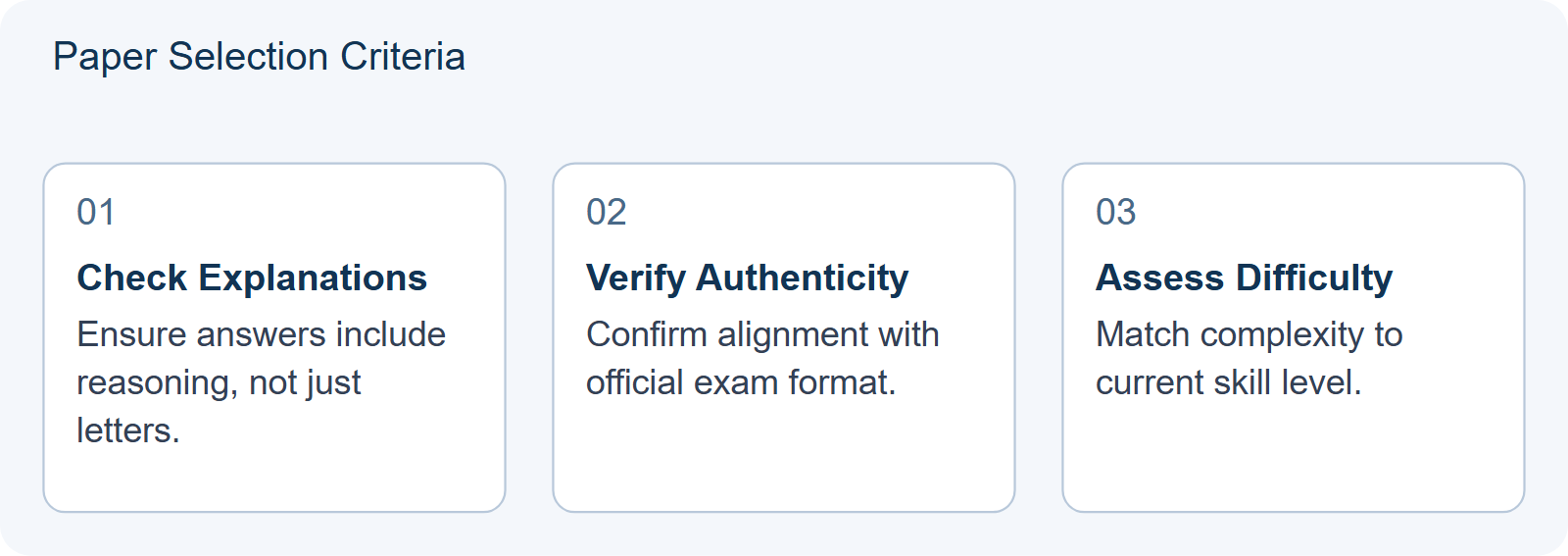
Not all answer keys are created equal. A simple list of correct letters (A, B, C, D) offers limited value beyond checking correctness. Effective preparation requires worked solutions or at least explanatory notes that clarify why a distractor is incorrect. When choosing between different sources of USABO past papers, consider the following:
- Explanatory Depth: Does the key explain the biological mechanism behind the answer?
- Topic Tagging: Are questions categorized by subject area (e.g., Genetics vs. Ecology)?
- Difficulty Calibration: Do the explanations match the expected level of a high school competitor?
For instance, if a question involves enzyme kinetics, a good answer key should briefly reference the relevant graph interpretation or formula application. This transforms a simple grading exercise into a learning opportunity. Students can refer to our guide on How to Judge a USABO Practice Question Before You Trust It for more criteria on assessing material quality.
Integrating Papers with Core Curriculum
Past papers should complement, not replace, foundational study. The primary textbook for USABO preparation is often Campbell Biology. Using USABO past papers alongside chapter reviews ensures that theoretical knowledge is applied correctly. For example, after studying plant physiology, attempting related questions from previous years can highlight gaps in understanding specific mechanisms like transpiration or photosynthesis pathways.
Additionally, cross-topic thinking is heavily rewarded in the USABO. Questions rarely stay within one silo. A single item might require knowledge of both cellular respiration and ecological energy flow. Our article on The Questions That Sit Between Topics explores how to prepare for these integrative challenges.
Strategic Review Process
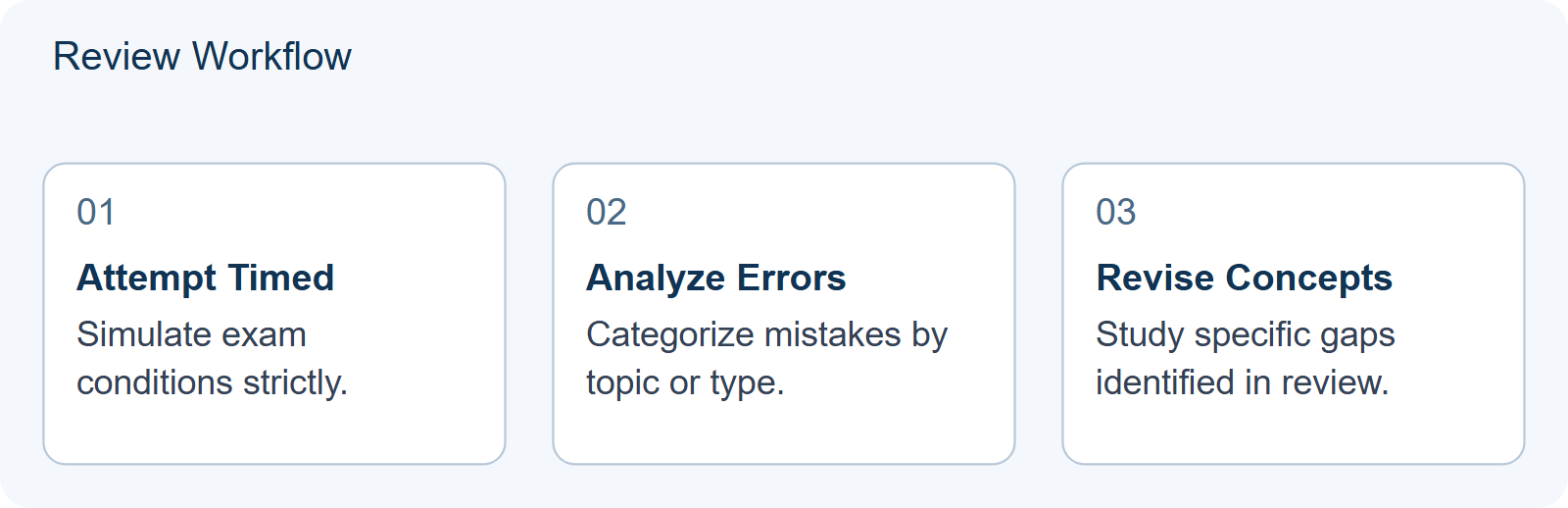
Merely completing a paper is insufficient. The real gain comes from the post-mortem analysis. Create a log of errors, categorizing them by type: knowledge gap, misreading, or timing issue. If you consistently miss questions on neurobiology, revisit those sections in your textbook. If errors stem from rushing, practice timed drills using shorter subsets of USABO past papers.
For students considering retaking the exam, a diagnostic approach is vital. Our resource on Sitting the USABO Again provides a framework for identifying persistent weaknesses before the next season begins.
| Practice Component | Actionable Step | Goal |
|---|---|---|
| Timed Simulation | Complete 10-15 questions in 10 minutes. | Build speed and accuracy under pressure. |
| Error Analysis | Write down why each wrong answer was chosen. | Identify cognitive biases or knowledge gaps. |
| Concept Mapping | Link missed questions to textbook chapters. | Targeted revision of weak areas. |
Conclusion
Accessing reliable USABO past papers is a cornerstone of effective preparation. By focusing on the quality of answer explanations and integrating practice with core curriculum study, students can significantly improve their performance. Remember that consistency and reflective practice yield better results than volume alone. Utilize available resources wisely, and always prioritize understanding over memorization.
HYPOTHETICAL/ILLUSTRATIVE: The Genetics vs. Ecology Coverage Audit
To apply the advice on evaluating answer key quality and integrating papers with core curriculum, consider a specific preparation scenario. Imagine a student named Alex who has completed three recent USABO past papers. Alex notices that while they scored well on ecology questions, their performance in genetics fluctuated wildly. Instead of simply re-reading the textbook chapter on Mendelian inheritance, Alex decides to perform a “Coverage Audit” using two different sources of practice materials to determine which is more useful for targeted improvement.
Alex compares Source A, a raw question bank with only letter-based answers, against Source B, a curated set with detailed worked solutions. For a complex problem involving linked genes and crossover frequencies, Source A simply marks the correct option as “C.” This tells Alex they were wrong but offers no insight into why. In contrast, Source B provides a step-by-step breakdown: it identifies the parental genotypes, calculates the recombinant frequency from the data table, and explicitly explains why Option D (a common distractor) fails because it assumes independent assortment rather than linkage. This explanatory depth transforms the error from a simple point loss into a conceptual correction.
The decision changes based on the nature of the error. If Alex’s mistake was a calculation slip, Source A might suffice for quick checking. However, if the error stemmed from misinterpreting the biological mechanism—such as confusing test crosses with backcrosses—Source B is indispensable. The reusable self-check here is not just “Did I get it right?” but “Can I explain the mechanism behind the correct answer without looking at the key?” If Alex cannot articulate why the distractors are biologically impossible, the practice material has failed to teach, regardless of the score.
This audit reveals that volume of practice is less important than the density of feedback. By prioritizing Source B for genetics topics where conceptual ambiguity exists, Alex saves time by avoiding repetitive drilling of already-known facts. Conversely, for ecology questions where Alex consistently scores high, Source A is adequate for maintaining speed and familiarity with question formats. This strategic differentiation ensures that study time is allocated where it yields the highest marginal return in understanding.
| Decision Factor | Choice 1: Raw Answer Key (Source A) | Choice 2: Worked Solutions (Source B) |
|---|---|---|
| Best Use Case | Confident topics; timing drills; verifying factual recall. | Weak areas; complex mechanisms; diagnosing conceptual errors. |
| Feedback Loop | Binary (Right/Wrong); low learning value per minute. | Diagnostic (Why Right/Why Wrong); high learning value per minute. |
| Self-Check Question | “Did I finish within the time limit?” | “Could I teach this concept to a peer using this explanation?” |
Frequently Asked Questions
Are USABO past papers free?
Availability varies. Many authorized providers offer compiled sets as part of broader preparation packages or free resource bundles.
Do I need worked solutions?
Yes. Simple answer keys are less effective. Worked solutions help understand the logic behind correct answers and why distractors are wrong.
How many years of papers should I do?
Focus on the most recent 3-5 years to capture current trends, but older papers are useful for drilling fundamental concepts.